10/04/2024

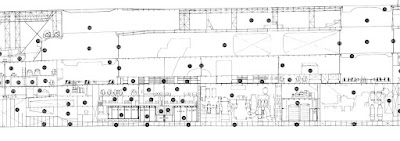
Organization of 244th Air Group, IJA Air Force - 1943 & 1945

For more details see on Rukaigun.org my translation of the Japanese article "Regarding the organization of 244th Air Group" by Sakuari Takashi, which describes organization of the IJA Air Force fighter unit.


244th Air Group Organization as of 1943
-------------------------
244th Air Group Organization from January to March 1945


16/12/2023

With vibrator - to victory!


During the Pacific War Japanese bureaucrats sometimes did ridiculous things to ensure "proper morals" were maintained by Japanese, as morals were considered important factor to win the war.

Among other things this meant women should've abstain from sex even as their husbands were in the military and away from home - sometimes for years.


So Japanese military decided to produce vibrators for women whose husbands were at the front. But once a model had been chosen and a factory established, authorities were unable to market this product to married women. Why? - Because advertising vibrators was banned as "immoral" by other bureaucrats.

Those who think I've invented all this - please look at pages 63-64 of the book "The thought war - Japanese imperial propaganda" by Barak Kushner.


10/12/2023

“Rikusentai” by Austin Adachi - a small review


Land combat component of the Imperial Japanese Navy is poorly researched in modern English-language literature. The book “Rikusentai” by Austin Adachi tries to correct this.

Despite small size, book gives reader good overall picture about IJN land forces (not just SNLFs – there were many IJN land formations, either intended or forced to fight on land): their creation, evolution, organization, uniform, weapons and equipment. Also it has many quality photos, which were never published before. And printing quality is excellent – the book is pleasure to read.


The only thing missing is combat history of IJN land units. But even a short description of combat operations will require at least several volumes of the “Rikusentai” size, so I can understand, why author decided to cut his description of combat operations down to the most general words.

As a researcher I’m also pleased, that, despite small size of the book, author found some space for the sources of his knowledge, which greatly helps people who’d like to find more on the topic.


In my opinion the book “Rikusentai” is a great work on topic despite its small size. 


Austin Adachi is also the head of the Japanese Naval Landing Forces Historical Preservation Association. It’s web site has a lot of interesting Japanese photos (sometimes totally unlike your average Pacific War Japanese photos): https://en.rikusentai.net/ 


21/07/2023

Flag competition for the Japanese Maritime Self-Defense Force


Presentation of the Japan Self-Defense Force flags in June 1954 (Army flag on the left, Navy flag on the right)


In 1954, Japan was allowed to re-establish a military force, called the Japanese Self-Defense Force. Among other things, a competition was announced in the country for new flags for the Army and Navy.

For the flag of the Japan Ground Self-Defense Force design was chosen with the traditional Rising Sun, but different from the banners of the former Imperial Japanese Army (you can see original IJA banners design in my post here: https://vijsko.blogspot.com/2023/06/imperial-japanese-army-regimental-flags.html ).

But there was a problem with the flag competition for the Japanese Maritime Self-Defense Force. An artist Yonai Suiho sent to the competition an old flag of the Imperial Japanese Navy with the bold claim, that nobody will come up with a better design anyway. And indeed, nobody was able to create anything better. Therefore, it was necessary to formally recognize the victory of the plagiarist – an incredible thing in Japan.

But this design was not very politically correct (World War II ended only 9 years ago), so the final decision was submitted for approval to Japanese Prime Minister Yoshida Shigeru. He said: "There is no country in the world, that does not know this flag" – and the design was approved. To this day Japanese Maritime Self-Defense Force uses this "old-new" flag design.


01/07/2023

Elevator covers on Japanese aircraft carriers

Click on the pictures below to enlarge them


There were discussions on various internet forums about the purpose of platforms on top of after elevator wells of IJN aircraft carriers "Akagi" (see above), "Kaga" and "Ryujo".

Usual answer was - those are double elevators, similar to those on HMS "Ark Royal".I’ll show, that those are not double elevators, but 後部飛行機昇降台上部覆 = "after elevator top covers", placed to protect after elevator from being damaged by landing plane. It was impossible to lower them below level of flying deck.
 
Look at my drawing to see how it operated:


But were those things actually elevator covers?
Let’s start with the "Ryujo". I have several drawings of this ship, which say exactly the same thing: this ship had no double-level after elevator, but single-level elevator with a special elevator cover.


At the top view of "Ryujo" after elevator you can see 4 "ears", that protruded outside the elevator well to ensure elevator cover won’t fall at the bottom of the elevator well (see below). 

The same "ears" can be seen on the after elevators of both "Akagi" (upper photo below) and "Kaga" (lower photo below).


On 1939 drawing of "Akagi" we can see see, that single-level middle elevator (captioned #90) is drawn in upper position flush with flying deck. Single-level aft elevator (also captioned #90) is at the bottom of the elevator well. BUT what's at at the top of the after elevator well? It is not captioned, but can be only elevator cover.


I’ve yet to see any official explanation for such an arrangement in any book on IJN aircraft carriers. But it’s not hard to guess, why it was used. After elevator area was the place, where aircraft have landed on those carriers. Even early aircraft were heavy and hit the deck hard. Apparently Japanese engineers were afraid, that such "kicks" will break after elevators, so they installed safety covers. Only the first IJN aircraft carrier "Hosho" received no such cover - probably because its landing area begun aft of the after elevator (see picture below).


The next generation of IJN carriers ("Soryu" (see picture below) and "Hiryu") also had their landing areas after the after elevators. Also by the time they were designed Japanese engineers, apparently, become sure the new elevator stoppers will be enough to prevent any accidents. So elevator covers never again appeared on IJN aircraft carriers.


Note, that elevator covers were retained on "Akagi", "Kaga" and "Ryujo" right to their sinking in 1942 (on the frame below elevator cover can be seen on "Kaga" (on the left side of the movie frame) in December 1941).


Sources: “Ryujo” drawings from S.Fukui collection (Kure Maritime Museum), “Akagi” drawing (Maru hardcover, drawings supplement, volume 1), H.Lengerer “Aircraft Carriers Of The Imperial Japanese Navy And Army” – Vol.1, Mechanism of Japanese Aircraft Carriers, Wikipedia photos.

19/06/2023

Imperial Japanese Army regimental flags

80th infantry regiment flag


Regimental ceremony


Regimental flag being readied for burning. Probably post-war


Flag of the 321st Infantry Regiment. The only IJA unit flag that survived in complete form to this day

Damaged unit flags as a mark of honor

Every army of the world likes to see equipment clean, tidy and repaired if damaged. But there was one exception: unit flags. In some armies damaged, torn flag was a symbol of veteran battle-tested regiment. That’s why damaged flags were not replaced and sometimes even not repaired of battle damage.


State color and color-bearer of USA 8th Pennsylvania Reserves, 37th Regiment, circa 1865


Flag of the 114th French Infantry Regiment in Paris, 14 July 1917


Imperial Japanese Army went to the extreme of this practice. They forbade any repair of the unit flags no matter the reason. As a result, some flags turned into tatters despite all the care of them. Sometimes only fringes remained of the banner.


Regimental flag of IJA 13th Cavalry Regiment, 1933


1910s postcard, showing regimental flags of the Japanese Army 4th Division. Damaged flags are proudly shown on the top


You can read excellent research on Imperial Japanese Army and Navy flags here: https://www.warrelics.eu/forum/japanese-militaria/banner-golden-brocade-647336/

The best part from this research is below: “As we have seen, the flags may have become total rags, having seen hell but also better days, but the army nonetheless demanded that the bearer had to have fairytale-like qualities of purity to deserve bearing the banner or whatever remained of it. Regimental Standard bearers were generally selected from newly commissioned 2nd Lieutenants (rarely 1st Lt), who took turns 1 year at a time. They had to be from the top of the class, of upright character, good-looking and tall. An unwritten rule (perhaps not to embarrass the man selected for this honor) was that only men still without carnal knowledge of a woman could be allowed. As such, frequent patrons of army bordellos were absolutely out of the question as candidates.